
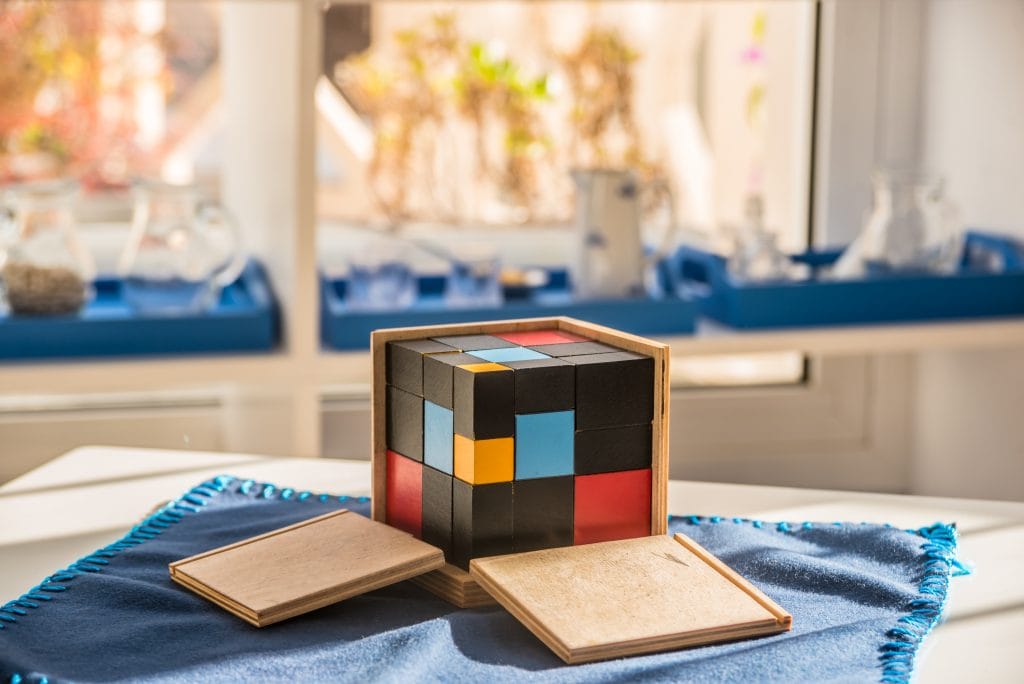
The material of the method is practical and aims at motor, sensory, logical – mathematical, social and language education.
The Montessori material is designed for
- to naturally arouse the interest of the child
- be attractive
- to encourage specific use
- to encourage discovery beyond the limits of use – extensions of the material
- to connect the concrete of the material with the real world
- to help focus
- to challenge intellectually and to prepare for future experiences
Each material exists only once in a Montessori classroom. Through the one and only material in the classroom, it cultivates moral values such as patience in waiting for the child to have his turn, backing down when he can’t have what he wants, respect for his friends, he learns to live with playtime within the limits they have set. He learns concepts such as cooperation, sharing, self-discipline, appreciation. Through group play, the child learns to coexist harmoniously with others and find ways to resolve the various conflicts that may arise during play.
The presentations of the material
Children learn how to use the material in so-called presentations. The educator invites the child to present a material. It presents the material in slow, deliberate movements, so that the child is given the opportunity to get to know its use and to identify the points of success. Then she gives the activity to the child to practice.
After the material has been presented, the child can choose the activity related to it and engage in it as long and as often as they like.
All Montessori materials are designed:
- be within the child’s measurements
- with real materials
- from simple to complex
- include error checking and allow self-correction, without adult intervention
- to encourage repetition
To make the above concepts more understandable we will use an example. To reach the activity of serving water from a jug to three different containers, the child first starts with the activity of serving lentils from a jug to three identical containers.
The reason the child is given this activity first is because while the lentils are similar in flow to water, they are much easier to collect through the tray the child is working on. So the child sees the lentils spilling out and picks them up without getting frustrated – error control. At the same time, he understands that in order to achieve his goal, he must center the spout of the jug over the container, which is the point of interest of the specific activity. Through repetition, the child achieves his goal, becomes stronger, gains self-confidence and concentration.