
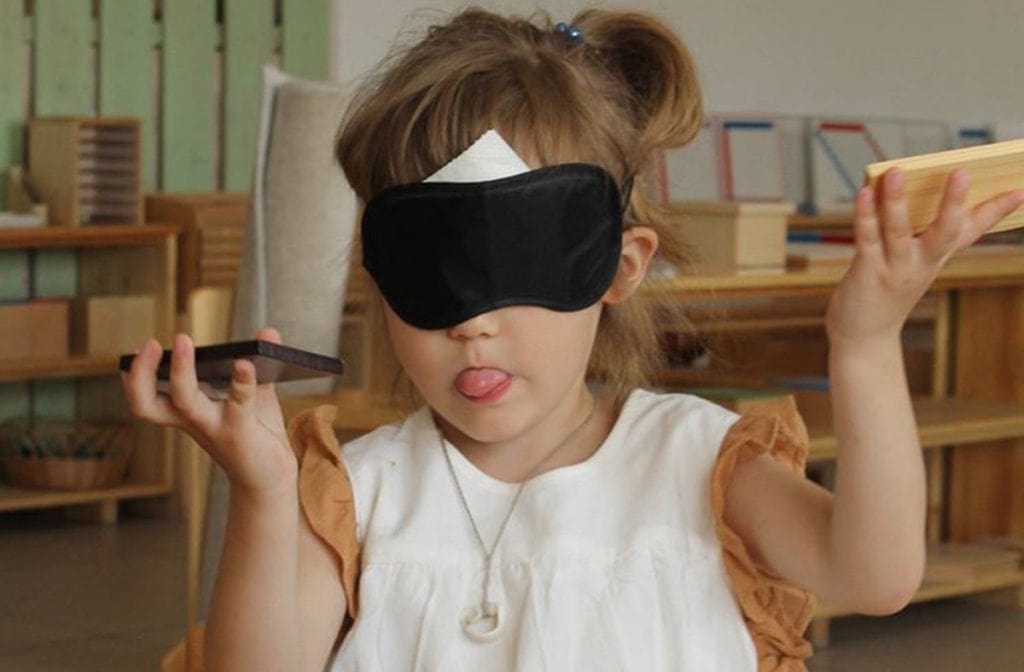
The Sensorial area is the bridge that helps the child understand the world through their senses—it is their natural way of learning. Together with the Cultural area, it forms the foundation of order.
Montessori sensorial materials help build the child’s “bank” of experiences by allowing them to explore the world through their senses. Each material focuses on one quality at a time—such as size, shape, color, or taste—so the child can clearly understand and name what they are experiencing. The materials are designed with control of error, helping children learn independently and develop precise vocabulary.
Through these activities, children begin to observe, compare, and organize what they see around them. The sensorial materials offer a concrete and simple reflection of the world, becoming the child’s first way of understanding their environment. Together with the cultural materials, they also support the development of imagination.
As the child works with these materials, they grow in their ability to discover, explain, match, and create.